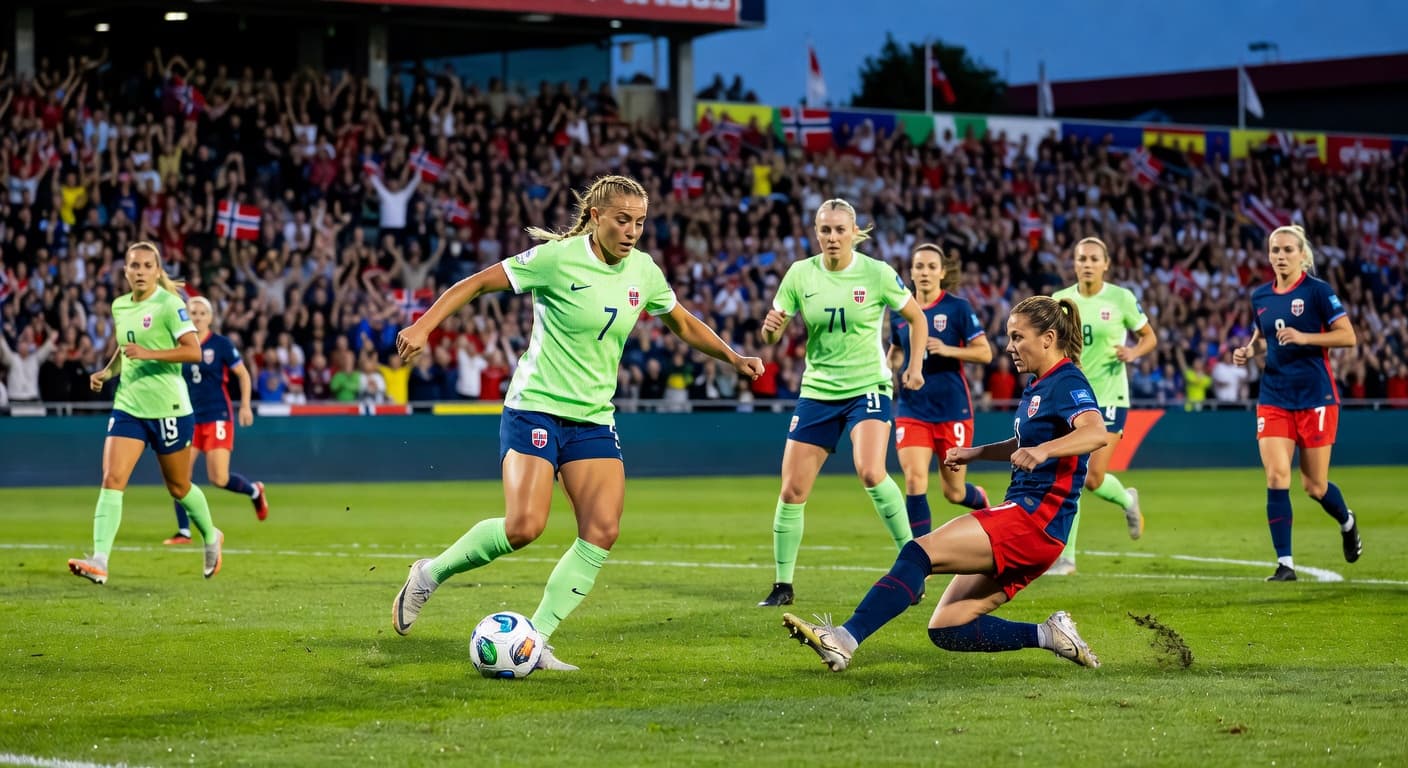
Norway’s Women’s National Team Focus on Youth and Tactics in 2026 Ahead of 2027 World Cup
As the road to the 2027 FIFA Women’s World Cup begins to take shape, Norway’s national team, affectionately known as Grasshoppene, is undergoing a significant rebuild in 2026. With a mix of veteran leadership and emerging talent, the team is laying the groundwork for a competitive campaign, as evidenced by their recent performances in international friendlies and training camps reported on May 5, 2026.
A New Era Under Hege Riise
Head coach Hege Riise, a legend of Norwegian women’s soccer, has been tasked with revitalizing a squad that has struggled to replicate past glories since their 2000 Olympic gold medal. After a disappointing showing in the 2023 World Cup, where they exited in the Round of 16, Riise has prioritized youth development while maintaining a core of experienced players like Ada Hegerberg and Caroline Graham Hansen.
In recent friendlies, Norway has shown flashes of promise, with a notable 2-1 victory over a strong European opponent in April 2026. While results remain inconsistent, Riise’s focus appears to be on long-term growth rather than immediate success. “We’re building a team that can peak in 2027,” she said in a recent interview. “Every match, every camp is a step toward that goal.”
Emerging Stars to Watch
One of the brightest spots in Norway’s rebuild is the emergence of young talent from domestic leagues and European clubs. Midfielder Frida Maanum, already a standout at Arsenal in the Women’s Super League, has taken on a larger role in the national team setup. Her vision and composure under pressure have drawn comparisons to former star Ingrid Syrstad Engen.
Up front, 20-year-old striker Sophie Roman Haug, currently with Liverpool, has caught the eye with her physicality and finishing. Her brace in a recent friendly underlined her potential to be Hegerberg’s successor as Norway’s talisman. On the defensive end, 22-year-old center-back Thea Bjelde is earning plaudits for her calmness and ability to read the game, providing a foundation for Riise’s backline.
Tactical Evolution
Riise has experimented with formations in 2026, often alternating between a 4-2-3-1 and a 4-3-3 to maximize the squad’s attacking potential. The emphasis on high pressing and quick transitions reflects a modern approach, though defensive lapses in recent games suggest work is still needed. Integrating Hegerberg and Hansen—both world-class but injury-prone—into a cohesive system remains a challenge, especially as younger players adapt to international intensity.
Norway’s style is also shifting toward possession-based play, a departure from their historically direct approach. While this transition has led to growing pains, as seen in turnovers against aggressive pressing teams, it signals Riise’s intent to build a team capable of controlling games at the highest level.
Challenges and Opportunities
The road to 2027 won’t be easy for Norway. Drawn into a competitive UEFA qualifying group, they’ll face stiff tests against teams like Sweden and Denmark, both of whom are also rebuilding with an eye on the World Cup. Injuries to key players, particularly Hegerberg, could derail momentum, while the integration of youth risks short-term inconsistency.
However, Norway’s depth of talent in European leagues provides a strong foundation. With players like Maanum and Haug gaining experience at top clubs, the Grasshoppene have the raw materials to become a dark horse in 2027. Friendlies scheduled for later in 2026, including rumored matchups against non-European sides, will offer further opportunities to test their progress.
Why This Matters for Women’s Soccer
Norway’s rebuild is emblematic of a broader trend in international women’s soccer, where traditional powerhouses are balancing experience with youth to stay competitive in an increasingly globalized game. As teams like Spain, England, and the USWNT continue to dominate headlines, Norway’s quiet progress could position them as a surprise contender in 2027.
For NWSL fans, Norway’s development is worth watching, as several players with ties to the league—past and present—could feature prominently. The international stage often influences domestic performances, and a strong Norwegian contingent could elevate the profile of women’s soccer globally.
As 2026 unfolds, Norway’s journey will be one to follow. With Riise at the helm and a new generation stepping up, the Grasshoppene are poised to reclaim their place among the elite—if they can navigate the challenges ahead.