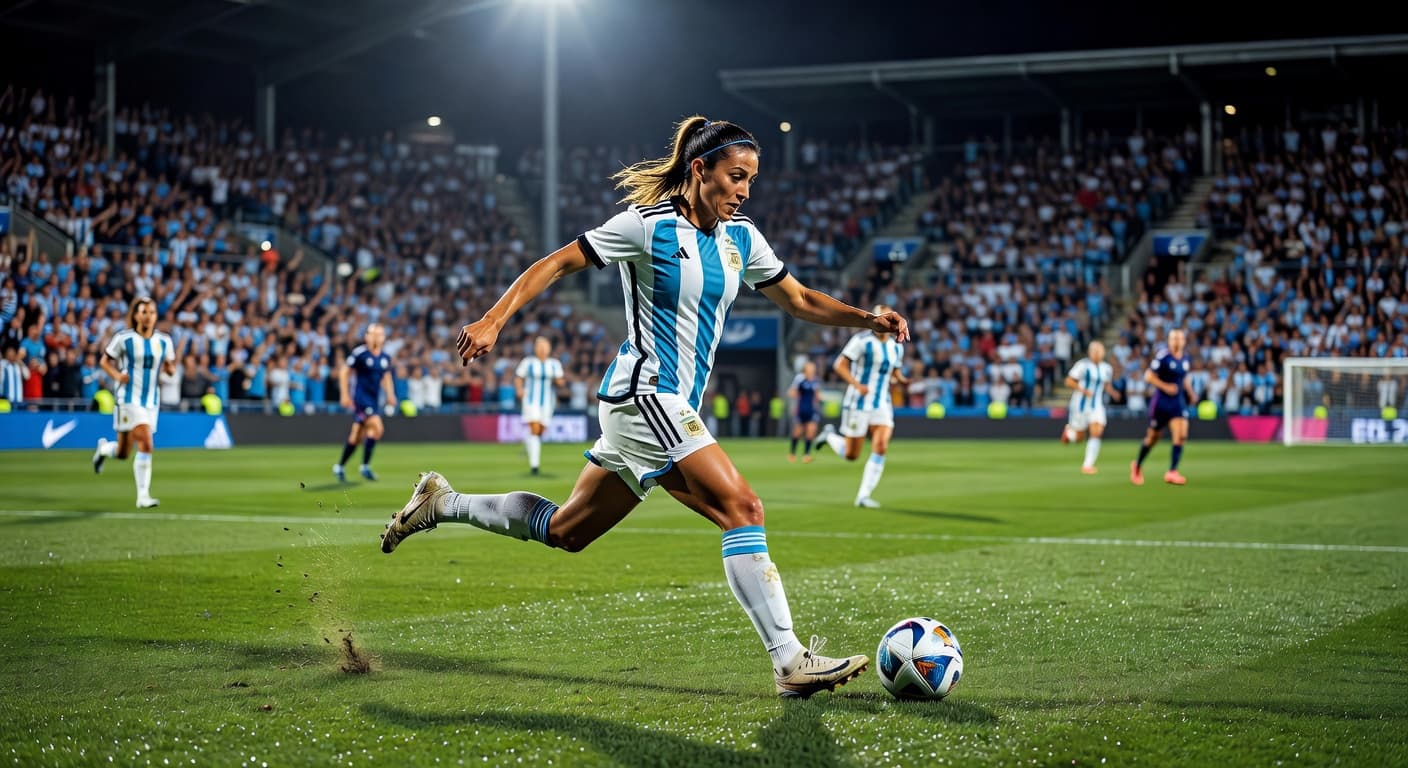
Argentina’s Women’s National Team Makes Strides in 2026
As the international women’s soccer calendar unfolds in 2026, Argentina’s Albiceleste have emerged as a team to watch, climbing the FIFA rankings and showcasing a renewed sense of purpose ahead of the 2027 World Cup. With a blend of emerging talent and tactical discipline, Argentina is carving out a reputation as a potential dark horse in South American women’s soccer, challenging traditional powerhouses like Brazil and Colombia for regional supremacy.
Recent Performances and Rankings Boost
Argentina’s recent form in friendlies and regional competitions has been impressive. Over the past few months, they’ve secured notable results, including a 2-0 victory over Chile and a hard-fought 1-1 draw against Uruguay in April 2026. These performances have contributed to a rise in the FIFA Women’s World Rankings, with Argentina moving into the top 30 for the first time in several years. While exact rankings can fluctuate, their upward trajectory signals growing consistency.
Under head coach Germán Portanova, who has been in charge since 2021, the team has adopted a more structured approach, focusing on defensive organization while leveraging pace on the wings. Portanova’s emphasis on youth development has paid dividends, with several players from the U-20 setup earning senior caps and making immediate impacts.
Key Players Driving the Surge
At the heart of Argentina’s resurgence is midfielder Estefanía Banini, a veteran playmaker who continues to orchestrate the attack with vision and precision. Banini, now in her early 30s, has adapted her game to become a deep-lying creator, dictating tempo and breaking opposition lines with incisive passes. Her leadership has been crucial in mentoring younger players.
Forward Yamila Rodríguez has also emerged as a standout, using her speed and finishing to trouble defenses. Rodríguez’s goal-scoring exploits in recent friendlies—she netted twice against Chile—highlight her potential as Argentina’s go-to striker. Meanwhile, goalkeeper Vanina Correa remains a reliable last line of defense, providing stability with her experience.
The integration of young talents like Dalila Ippólito, a dynamic attacking midfielder, further bolsters Argentina’s prospects. Ippólito’s ability to dribble past defenders and create chances adds a new dimension to the Albiceleste’s attack, making them less predictable than in years past.
Tactical Identity and Challenges
Portanova has instilled a 4-2-3-1 formation as Argentina’s base setup, allowing for defensive solidity through a double pivot in midfield while maintaining attacking width. This system has worked well against regional opponents, but questions remain about its effectiveness against top-tier global teams. In past encounters with European sides, Argentina has struggled to cope with high pressing and physicality—a potential area of concern heading into World Cup qualifiers.
Off the field, the team faces challenges related to resources and infrastructure. While the Argentine Football Association (AFA) has increased investment in women’s soccer, including professionalizing the domestic league, funding and exposure still lag behind men’s programs. Continued growth will depend on sustained support from the federation and greater visibility for players.
Why This Matters for 2027 World Cup
Argentina’s rise is significant in the context of South American women’s soccer, where Brazil has long dominated. With Colombia also making strides, the region is becoming more competitive, which bodes well for CONMEBOL’s representation on the global stage. For Argentina, qualifying for the 2027 World Cup—and potentially advancing past the group stage—would mark a historic achievement, building on their appearance in 2019.
Their upcoming fixtures, including potential friendlies against European teams later in 2026, will serve as critical tests. Success in these matches could further elevate their confidence and rankings, positioning them as a team capable of surprising bigger nations. Additionally, the development of domestic talent through the professional league ensures a pipeline of players ready to step up, a factor that could sustain Argentina’s momentum.
Global Context and Future Outlook
Globally, women’s soccer continues to grow in parity, with more nations investing in their programs. Argentina’s progress aligns with this trend, offering a South American perspective on the sport’s expansion. While they are not yet on par with powerhouses like the USWNT, Spain, or England, their trajectory suggests they could become a formidable mid-tier team by 2027.
For fans of international women’s soccer, Argentina’s story is one of resilience and potential. As the Albiceleste continue to build, their performances in the coming months will provide further insight into whether this rise is a temporary spike or the start of a sustained era of competitiveness. For now, their 2026 campaign serves as a reminder that talent and determination can elevate any team, regardless of historical standing.