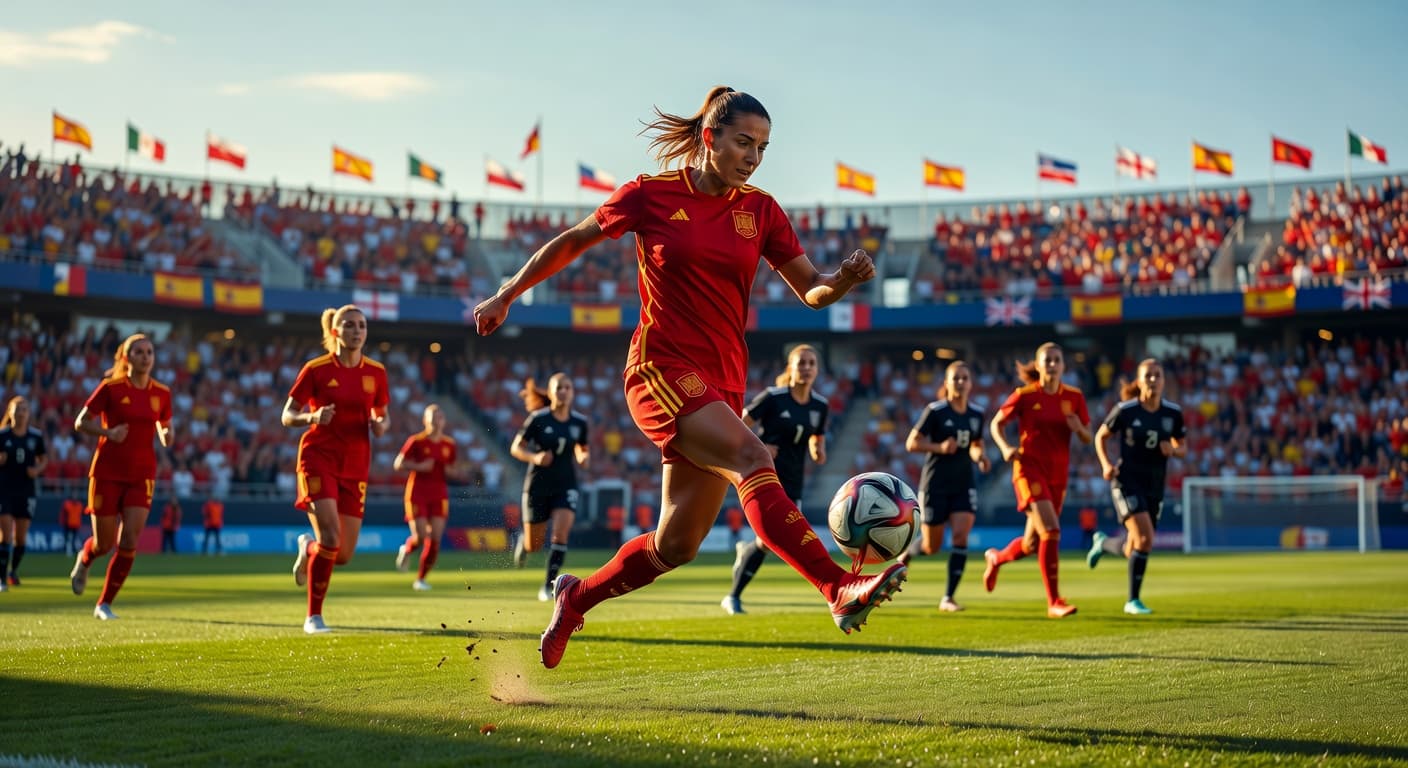
Spain’s Women’s National Team Asserts Dominance in April 2026 Friendlies
As the international women’s soccer calendar continues to heat up in preparation for the 2027 FIFA Women’s World Cup, Spain’s La Roja have emerged as a formidable force in their April 2026 friendly matches. With a series of commanding performances, the reigning World Cup champions are sending a clear message: they remain the team to beat. Here’s a deep dive into Spain’s recent form and what it means for the global landscape.
Stellar Results and Key Performances
Spain kicked off their April friendlies with a convincing victory over a top-10 ranked European side, showcasing their trademark possession-based style. Their ability to control the game was epitomized by Aitana Bonmatí, whose vision and passing in midfield dismantled the opposition’s defense. Up front, Salma Paralluelo continued to prove why she’s one of the world’s most exciting young talents, scoring crucial goals with clinical precision.
In their second match, La Roja faced a defensively stout South American opponent and still managed to secure a multi-goal win. Despite rotating several key players, Spain’s depth was on full display, with younger squad members stepping up alongside veterans like Irene Paredes, who anchored the backline with authority.
Tactical Mastery Under Montse Tomé
Head coach Montse Tomé has built on Spain’s 2023 World Cup triumph by refining their tactical approach. The team’s high press and quick transitions have become even more lethal, while their defensive structure has tightened, conceding very few chances in recent games. Tomé’s willingness to experiment with lineups during friendlies also highlights her focus on building a versatile squad capable of adapting to any challenge.
Why Spain’s Form Matters
Spain’s dominance in these friendlies isn’t just about racking up wins; it’s a statement of intent ahead of major tournaments. With the 2027 World Cup qualifiers on the horizon, La Roja are establishing themselves as frontrunners. Their ability to blend world-class talent with emerging stars ensures they’re not reliant on a single player or system—a nightmare for future opponents.
Moreover, Spain’s success continues to elevate the profile of women’s soccer in Europe and beyond. Their style of play, rooted in technical excellence and tactical discipline, sets a benchmark for other nations to aspire to, influencing the global game at both club and international levels.
Challenges on the Horizon
While Spain’s current form is impressive, they’re not without potential hurdles. Facing top-tier teams like the USWNT or Germany in upcoming friendlies will test their mettle against different tactical approaches. Additionally, maintaining peak performance over a long qualification cycle will require careful management of player fatigue and injuries, especially for stars like Bonmatí and Paralluelo who play heavy minutes at club level.
Implications for 2027 World Cup
If Spain can sustain this level of performance, they’ll enter the 2027 World Cup as favorites to defend their title. Their depth and adaptability make them a matchup nightmare, capable of exploiting weaknesses in any opponent. For rival nations, these friendlies serve as a wake-up call to innovate and evolve if they hope to dethrone La Roja.
Broader Impact on Women’s Soccer
Spain’s continued excellence also underscores the importance of investment in women’s soccer infrastructure. Their success is a product of years of development at the grassroots and professional levels, a model other federations are increasingly looking to emulate. As La Roja inspire the next generation, their performances in 2026 are a reminder of the sport’s rapid growth and boundless potential.
Spain’s April 2026 friendlies have solidified their status as a powerhouse in women’s soccer. With a perfect blend of talent, tactics, and tenacity, they’re poised to dominate for years to come. The rest of the world will be watching—and planning—how to catch up.