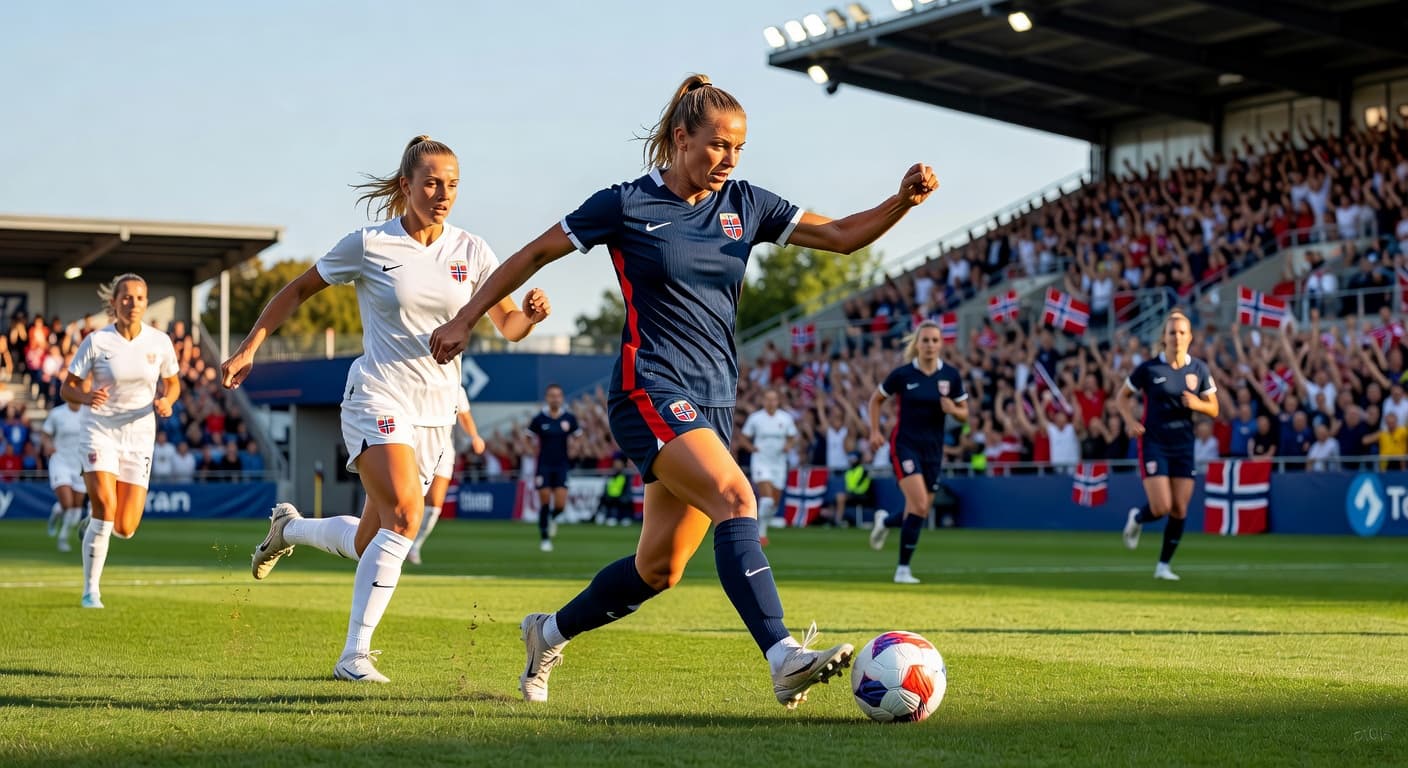
Norway’s National Team Sends a Strong Message Ahead of 2027 World Cup Qualifiers
As international women’s soccer teams ramp up preparations for the 2027 FIFA Women’s World Cup qualifiers, Norway’s women’s national team, known as the Grasshoppene, has emerged as a force to be reckoned with in their April 2026 friendly matches. Under the guidance of head coach Hege Riise, Norway has delivered impressive performances, showcasing a blend of tactical discipline and attacking flair. With standout results and emerging talents, their recent form offers a glimpse into their potential as contenders for the global stage. Here’s a closer look at Norway’s recent friendlies, key players, and what this means for their future.
Dominant Displays in April Friendlies
Norway kicked off their April 2026 international window with a commanding 3-0 victory over Denmark on April 9 at Ullevaal Stadion in Oslo. Goals from Ada Hegerberg, Guro Reiten, and young forward Sophie Román Haug highlighted the team’s attacking depth. Hegerberg, returning from a minor injury, looked sharp, while Reiten’s playmaking from the wing was a constant threat.
Their second friendly, a 2-1 win against the Czech Republic on April 13, further demonstrated Norway’s resilience. After conceding early, the Grasshoppene fought back with a second-half brace from Román Haug, who continues to stake her claim for a starting spot. Defensively, Norway showed improvement, with center-back Maren Mjelde marshalling the backline with authority.
Key Players Driving Norway’s Success
- Ada Hegerberg: The Lyon striker remains Norway’s talisman. Her clinical finishing and ability to link play make her indispensable as the team builds toward 2027.
- Guro Reiten: The Chelsea winger’s creativity and work rate have been central to Norway’s attacking play. Her versatility allows Riise to experiment with different formations.
- Sophie Román Haug: The 24-year-old forward is emerging as a star in the making. Her physical presence and knack for scoring crucial goals could see her become a regular starter.
- Maren Mjelde: The veteran defender’s leadership and composure under pressure have stabilized Norway’s backline, providing a foundation for their attacking players to shine.
Tactical Evolution Under Hege Riise
Since taking over as head coach, Hege Riise has instilled a clear identity in this Norwegian side. Her preferred 4-3-3 formation emphasizes width and quick transitions, with Reiten and Caroline Graham Hansen often cutting in from the flanks to create overloads in central areas. This approach has allowed Norway to exploit spaces against defensively compact teams like Denmark and the Czech Republic.
Defensively, Riise has focused on building a high-pressing system that disrupts opponents early. While this strategy occasionally leaves gaps at the back, Mjelde and goalkeeper Cecilie Fiskerstrand have been up to the task, ensuring Norway rarely concede easy chances. If Riise can fine-tune this balance, Norway could become even more formidable.
Why This Matters for Norway and International Soccer
Norway’s strong showing in these friendlies is a statement of intent ahead of the 2027 World Cup qualifiers. After missing out on the 2023 World Cup knockout stages, the Grasshoppene are determined to reassert themselves among Europe’s elite. Their current form suggests they are on the right track, with a mix of experienced stars and young talent providing depth and versatility.
For the broader landscape of international women’s soccer, Norway’s resurgence adds another layer of competition to an already stacked European field. Teams like Spain, England, and Germany will be on notice, as Norway looks capable of challenging for major honors if they maintain this trajectory.
Challenges and Next Steps
Despite their promising performances, Norway faces challenges in sustaining consistency. Injuries to key players like Hegerberg have hampered them in the past, and Riise will need to manage her squad carefully during the club season. Additionally, tougher tests against top-tier nations will be necessary to gauge their true potential—friendlies against teams like the USWNT or France could provide valuable insights.
Looking ahead, Norway’s focus will shift to the UEFA Women’s Euro 2025 qualifiers later in 2026, where they’ll aim to secure a spot in the tournament as a stepping stone to the 2027 World Cup. For now, their April friendlies have given fans and analysts alike plenty of reasons to be excited about the Grasshoppene’s future.
Conclusion
Norway’s women’s national team has sent a clear message in April 2026: they are a team on the rise. With standout performances from Hegerberg, Reiten, and Román Haug, coupled with Riise’s tactical vision, the Grasshoppene are building momentum at the perfect time. As the road to the 2027 World Cup begins to take shape, Norway is positioning itself as a serious contender, and the international soccer community will be watching closely.