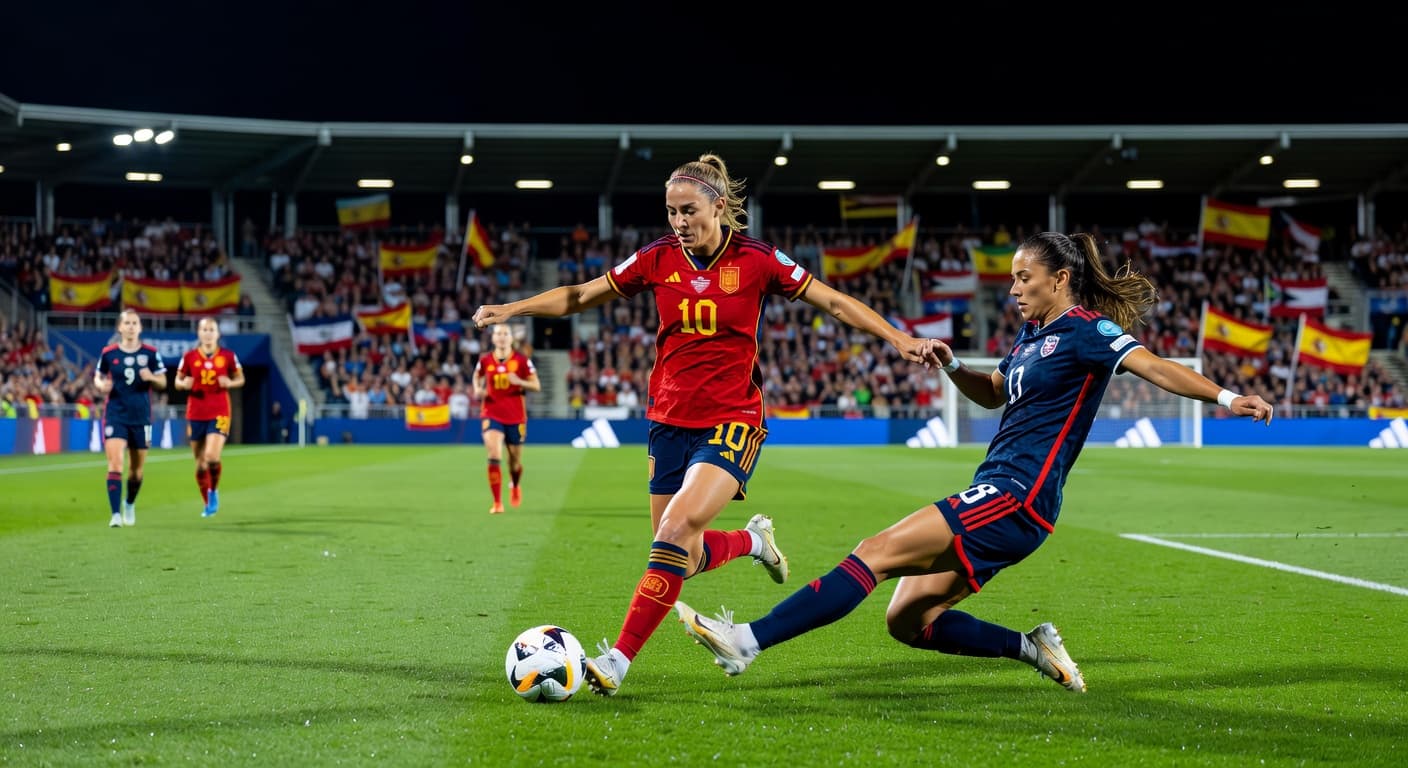
Spain Continues to Assert Dominance in March 2026 Friendlies
Spain’s women’s national team, La Roja, has reinforced their status as a global powerhouse with impressive performances in their March 2026 international friendlies. As preparations for the 2027 FIFA Women’s World Cup ramp up, these matches offer critical insights into Spain’s squad depth, tactical evolution, and readiness to defend their 2023 World Cup title. This article recaps their recent results, highlights standout players, and analyzes what their form means for the international landscape.
Strong Showings Against Top Opposition
On March 14, 2026, Spain faced Germany in a high-profile friendly in Valencia, securing a convincing 3-1 victory. The match showcased Spain’s signature possession-based style, with over 65% of the ball and relentless pressing that stifled Germany’s counterattacks. Goals from Aitana Bonmatí, Salma Paralluelo, and Mariona Caldentey underscored their attacking depth, while goalkeeper Cata Coll made crucial saves to preserve the lead.
Three days later, on March 17, Spain took on the Netherlands in Seville, earning a 2-0 win. Despite a more defensively disciplined opponent, La Roja broke through with a first-half strike from Alexia Putellas and a late goal by substitute Irene Guerrero. The clean sheet, anchored by center-back Irene Paredes, highlighted Spain’s improved defensive organization—a focus area after conceding in key matches during past tournaments.
Standout Performers and Emerging Talent
Aitana Bonmatí, the 2023 Ballon d’Or Féminin winner, continues to be the heartbeat of this Spanish side. Her goal against Germany came from a trademark run into the box, showcasing her ability to arrive late and finish with precision. Bonmatí’s vision and composure under pressure remain unmatched, making her a likely candidate to lead Spain into the next World Cup cycle.
Salma Paralluelo, still only 22, is emerging as a superstar. Her pace and clinical finishing were on full display against Germany, where she exploited space behind the backline to score. Coach Montse Tomé has increasingly relied on Paralluelo as a focal point in attack, often rotating her between winger and central striker roles to maximize her impact.
On the defensive end, Irene Paredes has solidified her role as a leader. Her partnership with María Méndez at center-back has brought stability, with Paredes’ experience guiding the younger Méndez through high-pressure situations. Goalkeeper Cata Coll, stepping into the spotlight after Misa Rodríguez’s injury, has also impressed with her shot-stopping and distribution.
Tactical Evolution Under Montse Tomé
Since taking over as head coach, Montse Tomé has refined Spain’s tiki-taka approach while adding layers of tactical flexibility. Against Germany, Spain often switched to a 4-2-3-1 during defensive phases, allowing Bonmatí and Putellas to press high while maintaining a compact shape. This adaptability counters criticism that Spain’s possession game can be predictable, showing they can grind out results when needed.
Tomé has also prioritized squad rotation to build depth—a necessity given the grueling nature of international tournaments. In the Netherlands match, substitutes like Guerrero and Athenea del Castillo made immediate impacts, suggesting Spain has a bench capable of changing games. This depth will be crucial as they face injuries and fatigue in future competitions.
Implications for the 2027 World Cup
Spain’s form in these friendlies sends a clear message: they remain the team to beat. Their blend of technical brilliance, emerging talent, and tactical discipline makes them favorites to contend for the 2027 World Cup, especially as other top nations like the USWNT and England navigate transitional phases. La Roja’s ability to dominate possession while improving defensively addresses past vulnerabilities, positioning them as a complete side.
For UEFA rivals, Spain’s performances are a wake-up call. Germany, despite their loss, showed moments of promise, but lacked the cohesion to match Spain’s intensity. The Netherlands, meanwhile, struggled to create chances against Spain’s high press, a reminder that even defensively sound teams can be overwhelmed by La Roja’s relentlessness.
What’s Next for Spain
Spain’s next international window in April 2026 will likely include matches against non-European opposition, offering a chance to test themselves against different styles. Rumored fixtures against Japan or Brazil could provide valuable preparation for the diverse challenges of a World Cup. For now, Tomé will focus on fine-tuning her squad, integrating younger players, and ensuring key veterans like Putellas remain fit.
As the road to 2027 continues, Spain’s dominance in these friendlies reaffirms their place at the pinnacle of women’s soccer. Opponents will need to innovate tactically and elevate their game to challenge La Roja’s reign. For fans, the question isn’t if Spain will contend, but how far their current golden generation can go.