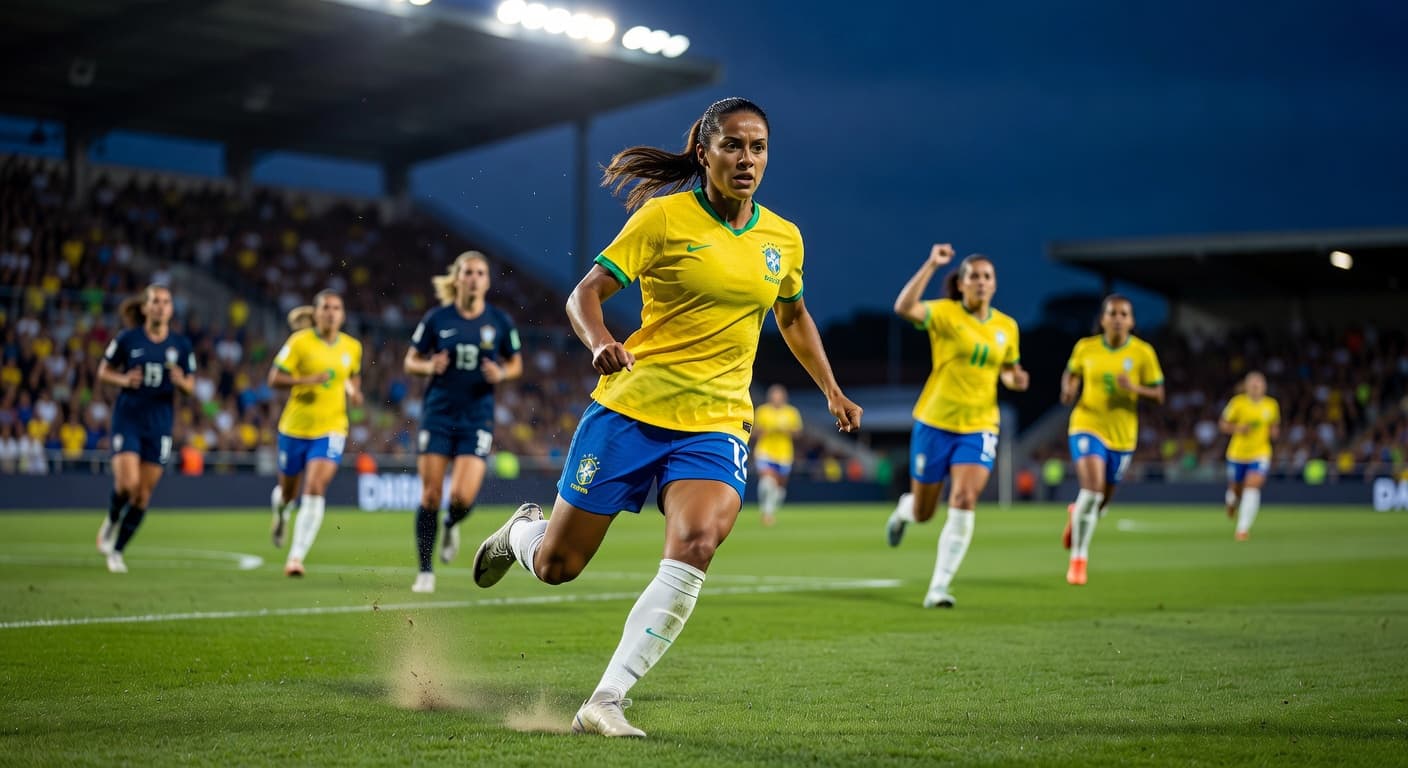
Brazil’s New Generation Signals Hope for 2027 World Cup Campaign
With the 2027 FIFA Women’s World Cup on the horizon, national teams across the globe are in the early stages of preparation, and Brazil is emerging as a team to watch. Under the guidance of coach Arthur Elias, the Seleção Feminina is undergoing a transformation, blending veteran leadership with an exciting crop of young talent. As qualifying matches loom and friendlies provide early tests in 2026, Brazil’s rising stars are generating buzz for their potential to carry the nation back to the pinnacle of international women’s soccer.
A New Era of Talent
Brazil has long been synonymous with flair and attacking prowess, and the current squad is no exception. Leading the charge among the new generation is Kerolin, the 26-year-old forward who has already made waves in the NWSL with the North Carolina Courage. Kerolin’s speed, dribbling, and finishing ability have made her a cornerstone of Brazil’s attack, and her performances in club soccer suggest she’s ready to step into a starring role on the international stage.
Joining Kerolin is 21-year-old midfielder Angelina, who has impressed with her composure and vision at OL Reign. Often compared to former Brazilian great Formiga for her work rate and tactical intelligence, Angelina represents the future of Brazil’s midfield. On the defensive end, young center-back Tarciane, currently playing for Corinthians in Brazil’s domestic league, has caught attention for her physicality and ability to read the game, earning call-ups to recent national team camps.
Blending Youth with Experience
While these young players bring fresh energy, Brazil still relies on the experience of legends like Marta, who continues to defy age with her creativity and leadership. Marta, now in the twilight of her illustrious career, has expressed a desire to mentor the next generation, and her influence is evident in how players like Kerolin emulate her flair. Alongside Marta, players like Debinha and Tamires provide stability, ensuring the team doesn’t lose its competitive edge during this transition.
Recent Performances and Outlook
In recent friendlies and tournaments like the 2025 SheBelieves Cup, Brazil has shown promising signs. A narrow loss to the USWNT and a convincing win over Canada highlighted both their potential and areas for improvement—namely, defensive organization against top-tier opposition. Coach Elias has emphasized building a versatile squad capable of adapting to different tactical demands, a necessity for success in the grueling World Cup format.
Qualification for the 2027 tournament, hosted by a yet-to-be-determined nation, will be Brazil’s first major test. As a traditional powerhouse in CONMEBOL, expectations are high, but competition from teams like Argentina and Colombia, who have also improved in recent years, means nothing is guaranteed. These early years of the cycle, including 2026 friendlies, are critical for integrating young talent and fine-tuning the squad.
Why This Matters for Women’s Soccer
Brazil’s resurgence is significant for the global game. Historically, the nation has produced some of the most iconic players in women’s soccer, yet consistent team success at the World Cup has eluded them since their 2007 runner-up finish. A strong Brazilian side raises the competitive bar in South America and beyond, challenging dominant forces like the USWNT and European giants. For fans, it’s a chance to see a new chapter of Brazilian magic unfold.
Moreover, the focus on youth development signals a sustainable approach. By nurturing talents like Kerolin, Angelina, and Tarciane, Brazil is investing in a future that could extend beyond 2027. Partnerships with clubs in leagues like the NWSL, where many Brazilian players now compete, also ensure these athletes gain top-level experience year-round.
What’s Next for Brazil?
The remainder of 2026 will see Brazil face a mix of friendlies and regional competitions, providing further opportunities to test their squad depth. Matches against European teams will be particularly telling, as they mimic the challenges of a World Cup knockout stage. For now, the blend of youth and experience offers hope that Brazil can reclaim their status among the elite.
As the international women’s soccer landscape evolves, Brazil’s journey toward 2027 is one to follow closely. With rising stars stepping into the spotlight, the Seleção Feminina could be on the cusp of a golden era—provided they harness this talent effectively. For global fans, the prospect of a revitalized Brazil adds yet another layer of excitement to an already competitive field.