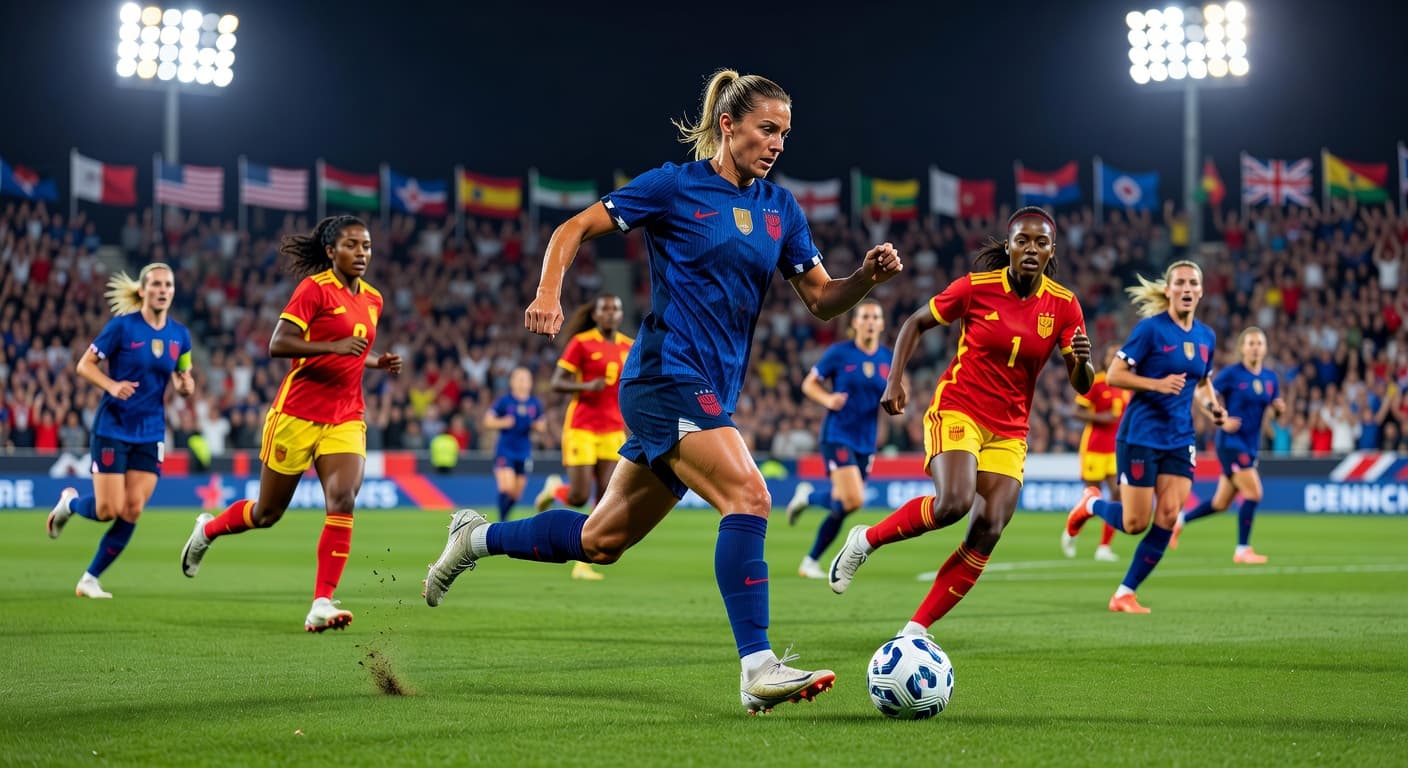
USWNT Set for Crucial Test in March 2026 Friendlies Ahead of Olympic Cycle
With the 2026 international calendar kicking into high gear, the United States Women’s National Team (USWNT) is gearing up for a pair of high-profile friendlies this March. As the team continues to build toward the next Olympic cycle and beyond, these matches offer a critical opportunity to assess talent, refine tactics, and integrate the next generation of stars. Here’s what to expect from the USWNT’s upcoming fixtures, the key players in focus, and why these games matter in the broader context of women’s international soccer.
Match Schedule and Opponents
The USWNT will face two formidable opponents this month, starting with a clash against Japan on March 21 at a yet-to-be-confirmed venue in the United States. Japan, known for their technical precision and disciplined play, will provide a stern test for the Americans, especially after their competitive showings in recent international tournaments. The second friendly pits the USWNT against Brazil on March 25, a matchup that promises flair and intensity given Brazil’s attacking prowess and historical rivalry with the U.S.
These friendlies come at a pivotal time for the USWNT, who are in a transitional phase following the 2023 World Cup and the retirement of several veteran players. Under head coach Emma Hayes, who has emphasized a blend of youth and experience, the team is looking to establish a clear identity ahead of major competitions.
Roster Spotlight: Emerging Talent and Veterans
While the official roster for these friendlies has not yet been announced as of March 14, 2026, expectations are high for a mix of established stars and rising talents. Players like Sophia Smith, who has been in scintillating form for Portland Thorns in the NWSL, are likely to lead the attack alongside veterans such as Alex Morgan, if she is called up. In midfield, the dynamic duo of Rose Lavelle and Lindsey Horan will be central to dictating play, assuming fitness.
One area of intrigue is the defensive lineup, where Naomi Girma has emerged as a cornerstone. Her partnership with whoever joins her at center-back—potentially Tierna Davidson or a newer face—will be under scrutiny against Japan’s intricate passing and Brazil’s direct threats. Additionally, fans will be eager to see if young prospects like Olivia Moultrie or Jaedyn Shaw earn significant minutes, as Hayes continues to evaluate depth for the future.
Tactical Focus Under Emma Hayes
Since taking the reins, Hayes has prioritized versatility and adaptability, often experimenting with formations to maximize player strengths. Against Japan, expect the USWNT to focus on high pressing to disrupt their opponents’ rhythm, while the Brazil match may require a more balanced approach to counter their speed on the wings. Hayes has also hinted at refining set-piece routines, an area where the team has occasionally struggled in recent years.
These friendlies will serve as a litmus test for Hayes’ progress in implementing her vision. With the Olympic cycle looming, every international window is a chance to fine-tune strategies and build chemistry among a squad that blends multiple generations of talent.
Why These Friendlies Matter
Beyond the immediate results, these matches carry significant weight for the USWNT’s long-term goals. Facing top-tier opposition like Japan and Brazil allows the team to gauge their standing against diverse playing styles, a crucial factor as they prepare for future tournaments. Additionally, these games offer a platform for younger players to stake their claim for regular spots, especially with veterans potentially phasing out in the coming years.
For fans, the friendlies are a chance to see how the USWNT stacks up in a post-2023 World Cup landscape where global parity in women’s soccer continues to grow. Japan and Brazil, both with their own ambitions, will not roll over easily, making these encounters must-watch events.
Broader Implications for Women’s Soccer
The USWNT’s performance in March 2026 will also resonate across the international women’s soccer scene. As one of the sport’s traditional powerhouses, their ability to adapt and innovate often sets trends for other national teams. Success in these friendlies could signal that the U.S. is back on track after a transitional period, while struggles might raise questions about their readiness for upcoming challenges.
As the dates approach, anticipation builds for what promises to be an exciting window of international action. The USWNT’s journey under Hayes continues, and these friendlies will provide valuable insights into the team’s direction. Stay tuned for roster announcements and matchday coverage as NWSL News brings you the latest on this critical chapter for American women’s soccer.